Thursday, August 10, 2006

Every family should have a dog


The world's best dog, Coal, at left.

From Marley & Me:

"He was a central player in some of the happiest chapters of our lives. Chapters of young love and new beginnings, of budding careers and tiny babies. Of heady successes and crushing disappointments; of discovery and freedom and self-realization. He came into our lives just as we were trying to figure out what they would become. He joined us as we grappled with what every couple must eventually confront, the sometimes painful process of forging from two distinct pasts one shared future. He became part of our melded fabric, a tightly woven and inseparable strand in the weave that was us. Just as we had helped shape him into the family pet he would become, he helped to shape us, as well--as a couple, as parents, as animal lovers, as adults. Despite everything, all the disappointments and unmet expectations, Marley had given us a gift, at once priceless and free. He taught us the art of unqualified love. How to give it, how to accept it. Where there is that, most of the other pieces fall into place."

Tuesday, August 08, 2006

The beauty of it all

You know you've got a mainstream issue when beauty pageant contestants are taking it on as their platform.

Cultural differences

From an excellent article on the unique challenges facing Indian Americans who are divorced:

“In the South Asian culture, the concept of family is very central, and any break from the tradition causes stress,” says Dr. Alzak Amlani, a clinical psychologist who has been practicing for the past 18 years in Palo Alto and San Francisco, as he talks about the issue of divorce. “The entire extended family will then withdraw its support to even the children, as they are disapproving and want no part of the situation. In a worst-case scenario, the father completely abandons the children and won’t even visit them unless made mandatory by law. The entire load is then on the single parent.”

Saturday, August 05, 2006

Family Scholars weigh in

While things were crazy at chez Kristine the last week or so and the blog got a little dusty, the folks at Family Scholars blog were writing a blitz of posts on children of divorce. Check them out:

What does 'stepfamily' mean?
Are stepmothers more likely to be 'toxic parents'?
It's the divorce, not the genes
Hispanic Familism & Assimilating to American Divorce Culture
International Conference on Children and Divorce: Part 1 and Part 2

Creating a safe environment

I linked to a post previously about a program like this, but this article has additional details on how the program works. Called Kids' Corner, this provides a safe environment for children to be handed off from one parent to another in situations where violence or turbulence exists. According to the article, "The program prevents having the children come into contact with police who have to show up and quell the violence with their parents."

Still, some people never learn to get along. "Some cases show up 17 years after the couple splits, as the ex-husband and wife battle over issues, such as who pays the college tuition and who gets to see the grades of the students...'Imagine yourself ready to go off to college and getting a fresh start, but having to come back to court to testify how much scholarship money you will receive and how much you have to pay for tuition.'"

Jack Black on his parents' divorce

"Even if your parents still love you, the fact that they hate each other makes you feel there's something wrong with you."

More here.

Waiting to divorce

"This prompted me to look into the states that have the lowest divorce rates and the states that have the highest divorce rates; if they had waiting periods and if so how long they are. What I discovered was shocking.

"The eight states with the highest divorce rates:Nevada, Arkansas, Wyoming, Tennessee, Kentucky, Alabama, New Mexico, and Mississippi. They have an average of 5.2 divorces per 1,000 population and an average waiting period of 40 days.

"The eight states with the lowest divorce rates:Maryland, Wisconsin, Iowa, North Dakota, Illinois, Pennsylvania, Massachusetts, and the District of Columbia, which have an average divorce rate of 2.6 divorces per 1,000 population and an average waiting period of 190.5 days. "

Read the rest of this article here.

Saturday, July 22, 2006

Yes, Jesus Loves Me

From a great article on children, divorce, and faith in the Winston-Salem Journal:

"More than 40 percent of those adult children of divorce who are members of a faith community describe themselves as born again. Marquardt theorizes that they are drawn to the theology found in evangelical churches, 'where you have a more direct personal relationship with God as father through the son, Jesus Christ.'"

Wednesday, July 19, 2006

Divorce and children on The Today Show

Elizabeth Marquardt gets the opener and then Matt Lauer interviews a family therapist about how divorce affects kids. Watch the video here.

Tuesday, July 18, 2006

Telling the truth

I just finished a collection of essays by Marjorie Williams, a writer for the Washington Post and Vanity Fair who died last year from liver cancer, living behind a husband and two young children. It was an impulse buy at Borders a few weeks back, intriguing me because of the subjects of her political profiles, the caliber of her writing, and the hook that this was a book posthumously collected and and lovingly edited by her husband, journalist Timothy Noah. The book, The Woman at the Washington Zoo, starts with a series of fascinating profiles of Washington's colorful personalities, then slogs through the mechanics of politics, and finally lands squarely in the realism of cancer and motherhood and life. These last pages are now smeared with mascara and dog-eared where there are passages I want to share with friends for one reason and another.

Williams isn't writing about divorce, but in these latter essays she has a great deal to say about parenting in the midst of a situation that stinks for everyone, that has no ultimate happy ending, that brings issues adults don't even like to deal with smack into the lives of children. In an essay titled "Telling the Real, Real Truth," Williams faces up to tough questions from her kids that nearly any parent can relate to--questions about that jolly old elf, Santa--and in so doing, she learns how to parcel out information about her sickness. And so she tells them the truth of Santa, that he is Mommy and Daddy, but assures them that if they want, they can continue to pretend that Santa exists.

"If this had been a normal year, I couldn't have asserted with such authority, that it is feasible to live two possibilities at once. Facing down the Santa issue reminds me that every time I step up to one of those big, choking questions about my future, my anxiety evenually turns to relief. You can almost see the children choose which parts they can take on right now, which to jettison. And then off they run, in search of the rich oblivion of SpongeBob and baseball."

A reader emailed me last week worried about how she and her husband would tell their young child about their separation, which now appeared to be irreparable and headed for divorce. My advice to her was very much in line with how Williams dealt with telling her kids about cancer. Give them the facts they need to know, without burdening them with unnecessary detail. Answer their questions honestly and simply. There will be more questions in the weeks and years to come, and they can be dealt with in their own time; but for now the simplicity of the real, real truth is sufficient.

Shaken or stirred?

After reading about Anne Burt's new book, My Father Married Your Mother, I ordered it from Amazon. It was on the porch step today when I got home from work. I read the introduction and already I am encouraged. Despite the book description on Amazon, which says that Burt is exploding the "myth of the perfect nuclear family," Burt says in the introduction that she is exploding the myth of the perfect blended family. She's battling Carol Brady, not June Cleaver. As a divorced mom marrying a divorced dad, she came to realize that their family would be more of a mix, not a perfect blend. Her book, she says, came from a desire to bring a dose of honesty and realism to relationships that everyone wanted to dance around and pretend were perfect and lovely. She says:

"According to the Oxford English Dictionary, the origin of the prefix 'step' comes from the Anglo-Saxon 'steop.' It means 'bereaved.' Of course, I thought: I wasn't about to become a stepmother because I would 'step' in to parent Delayna, nor would I be a 'step' removed from her. The archival meaning of the word 'stepmother' addressed the grief inherent in our situation: why, then, didn't any of the books? I had found the Evil Stepmother at last, only to discover that she had been buried under mountains of sunny advice on the blended family and finger pointing at the nature of divorce."

The thing about blending families is that it doesn't happen all at once. The perspective is always different when you're the one who has fallen in love than when you're the one who is, in some way, standing on the sidelines. For those in love, the blend has already occurred; they are, assuming marriage is part of that equation, in the process of becoming one flesh, the most blended kind of relationship God created. That's part of the beauty about the 'in love' part. The rest of us have to grow to love that person. This isn't a contrived or less holy thing, but it is usually a slower process. Maybe it's just too darn hot today, but the phrase that comes to mind is the latest ice cream catch phrase: slow churned. I like it. Now, excuse me while I make a trip to Safeway...

Friday, July 14, 2006

What do you wish for?

On this week's radio program, Family Life host Dennis Rainey said:

"Carvel Ice Cream Bakery, which is located on the East Coast, asked about 1,500 people when they blow out their candles what they wished for on the birthday cake when they blow them out – 75 percent of the children with divorced parents wished for their parents to be reconciled."

This was part of a five part series featuring Divorce Care founder Steve Grissom. On Monday, Steve gave his own story; on Tuesday, Steve talked about the legal cost of divorce; Wednesday was on the financial cost of divorce; Thursday was on the emotional cost; and today's program features the cost on the lives of children. You can read the transcripts, order CDs, or download MP3s of each day's program at the Family Life web site.

Thursday, July 13, 2006

Grandparents play a crucial role

From Dr. Joyce Brothers:
"Grandparents like you are always important to children and to the general welfare of families and family life, but after a divorce, they become even more vital in terms of helping to heal a child's shattered home. They provide a much-needed sense of security, as well as family continuity and strength."

How do you spell "denial"?

London rag Daily News with a surprisingly touching story about Kate Moss:

"while her parents have always maintained that Kate was unaffected by their split, friends insist otherwise."

Wow. It doesn't take a genius to see that Moss is a very troubled woman with a lot of issues.

"...‘The breakdown of Linda and Peter’s marriage had a massive effect on Kate and her brother Nick,’ says the friend. ‘It was a really painful time for all the family, with lots of heated arguments and one massive screaming match when it finally came to an end.’ At the time, Kate was still attending Riddlesdown High School in Croydon. Friends remember her ‘going off the rails at that point’, disappearing with unsuitable boys. ‘Modelling offered her an escape.'...The effect on Kate was devastating. For her, the divorce changed everything. Not least because her big break — being spotted at the tender age of 14 by Sarah Doukas of the Storm model agency — unfolded at JFK airport in New York in 1988, when her father had taken her on holiday as part of the trial separation."

Thursday, July 06, 2006

Summer camp brings joy

Operation Smile in NJ provides summer camp opportunity for disadvantaged kids, including an 11-year-old who is having difficulty adjusting to his parents' divorce.

"A short break from the turmoil at home would help Ronald relax and give him the chance to enjoy the summer and just have fun."

Laugh a little

My sense of humor has always stood out in my family. It's quirky, witty, and quick. My mom, God bless her, can't tell jokes; she does it so badly that her inability to tell jokes is a joke in our family. My stepfather has a good sense of humor. But when I get together with my dad, I remember where my sense of humor comes from. Clearly it is pure nature, not nurture, since I haven't spent enough time with my dad through the years to develop a sense of humor from him. It's purely inborn, baby. Still it surprises and delights me when I hear my dad say something hilarious, the kind of thing I would say in the same circumstance.

When we spent a day together in Paris, we were riding around on a tour bus and Dad cracked a joke that only I got. We were talking about museums and he said, "I've been to that Rodin museum, and it's a complete waste of time. There is nothing there about flying monsters."

I've told it to several friends and had to explain it to them. I think this should be my new dating requirement: If a guy gets this kind of humor without having it explained to him. If you didn't get the joke, follow the links. And don't call me.

Wednesday, July 05, 2006

Becoming a child of divorce when you're not a child

Months ago, I promised a review of Brooke Lea Foster’s book The Way They Were: Dealing With Your Parents’ Divorce After a Lifetime of Marriage. It’s taken me a long time to make good on that promise. The delay, honestly, has been due in part to the fact that this was a hard book to read. Reaffirming my view that the only real fix for the brokenness that divorce imposes on us, Foster’s book is more than a little depressing. When she was a young twenty-something, Foster’s parents began a long and bitter divorce. Her mother was vindictive and snarky, her father was depressed. Foster’s relationship with both parents suffered and the strident tone of the book and the advice offered therein left me with the impression that Foster is still angry and resentful over the whole situation.

On the plus side, Foster’s book gives a voice to the adult children of divorce, those whose parents split up after the kids have flown the coop. Her research found that “20 percent of today’s divorces take place among individuals married more than fifteen years,” so her audience is not as small as you might think. Calling them the “lost-nest generation,” Foster details some of the unique difficulties facing these adult children:
- The parents’ marriage has had time to become part of the individual’s identity as a person, part of how they understand themselves and their broader family, and now that portion of their identity is being taken away.
- Parents who wouldn’t dream of telling their young children about intimate details of the breakup and their new life do not hesitate to share this information with adult children.
- Parents think it shouldn’t be a big deal because the kids are gone from the home; sometimes they even want their children to applaud their break for freedom. Because of this, adult children doubt their right to hurt.
- Because all their childhood stories typically involve the person one parent is trying to forget, oral history is lost or stifled.
- The breakup of a marriage that has lasted so long makes the kids wonder if the parents can be trusted at all, if the whole thing was a lie.

Reiterating the post on this blog quoting from Prison Angel, Foster says a study by Pennsylvania State University “found that 77 percent of adult children surveyed worried for their parents after a divorce, as they would worry for the well-being of their own child.”

Foster talks as well about the effect of parents’ divorces on their children with regard to romance and marriage:

Our own romantic relationships seem less certain when our parents’ marriage fails…We’d like to believe that the love between our parents is bigger than any problem. After an affair, we see our parents reduced to baser urges and impulses. When a parent cheats, the lessons learned aren’t encouraging. We realize that we can never know what’s really going on in someone’s head and heart. A person may say one thing and do another. No one can be trusted. These are all damaging, cynical thoughts for a young adult searching for a soul mate…Adult children feel less innocent going into relationships, as if their parent’s affair has marked them in some
way. We worry that telling someone why our parents divorced makes us less
desirable. Do people assume that we’ll cheat, too? Says one twenty-nine-year-old man, his dad’s affair “reflects poorly on me as a potential mate. It’s something I can’t help, but it’s there.”

As a generation, we’ve embraced marriage more than our parents did. In the late
1990s, demographer Pamela Paul noticed an interesting trend. Unlike our mothers, who dreamed of careers and independence, Generation Xers dreamed of domesticity. Forget Murphy Brown. We wanted to be Donna Reed. In a 1999 poll by a national market research firm, 57 percent of Gen Xers said they “would like to see a return to more traditional standards of marriage.” We don’t want to juggle home, family, and career as our parents did. We want to be there for our children in all the ways in which our busy parents couldn’t be there for us….As a generation, we’re also believers in divorce. Paul’s book The Starter Marriage and the Future of Matrimony cites a 2001 survey by the Centers for Disease Control and Prevention stating that one in five first marriages ends in divorce within the first five years. “Americans are diving in and out of matrimony with a seeming ease that belies the premise of the institution. Is this, one wonders, how the tensions between our optimistic yearning for marriage and our darker, childhood experiences with divorce are meant to play out?” Paul writes.


While Foster gives a list of tips at the end of each chapter, some of which are good, I felt a sense of despondency reading this book. The problems seemed so much bigger than the solutions offered. This is the reason I started writing about faith and divorce. Those of us who believe in a Father God have a solution so much bigger than the problems. While others may bemoan “the way they were,” we can celebrate the way He is!

Feeling protective


In one of those strange role reversals that often take place between kids and their divorced parents, we kids often become very protective of our parents. I was reminded of this reading a great book, Prison Angel, about a twice-divorced mother and grandmother who left a life of privilege in Beverly Hills to become a nun living and working in a Tijuana prison. Her youngest child was a teenager and still at home when she first began going to the prison for short visits. From page 74 of the hardback edition:

"I saw my dad go on and get remarried, and he had his own life," he says. "My brothers and sisters, they had their lives, they were married. Everyone was on their own and taken care of, and my mom was by herself. She was doing this work in Mexico that was really hard. I wanted her to find somebody to love her."

Mother Antonio was distressed about how much Anthony worried about her...

Saturday, July 01, 2006

Defining families

There's been a lot of talk lately about defining marriage. A lot of folks want to broaden the definition of marriage to include a lot of things that don't really look like, well, marriage. What's the big deal?, these folks say, it's just a word.

Interestingly, those of us who've grown up with divorced parents are pretty darn particular about family definitions. I've noticed this in others and in myself. We make distinctions between stepfathers or stepmothers and "my dad's wife" or "my mom's husband." These terms are not interchangeable for children of divorce. The first set of terms defines a relationship that holds some real essence of parenting, one that feels and looks like family. The second set defines a relationship that may include friendship and respect but is not a parent/child dynamic. Maybe it's our way of gaining a little bit of control in an often out-of-control world, but these distinctions are important. They help us tell others how our family--which is no longer just mom, dad, and child--fit together and function.

We do the same sort of thing with sibling relationships. Full, half, and step siblings are often distinguished, but there is an exception to this rule. When half-siblings are born into the same household family that we live in, we often just call them our siblings, not our half-siblings. I never refer to my two brothers as my half-brothers, although technically that's what they are. I don't think of them that way, and they don't think of me as their half-sister. Why? Because they were born into the family that was my primary family. I lived exclusively with my mom and stepfather, whose sons they are. They thought it a little weird, I suppose, that I went away for a couple of weeks each summer to visit grandparents they didn't know, but gradually they came to understand that our mother had been married before and that I had another dad somewhere else.

When I was in France a few weeks ago, my dad and his wife (if you're reading closely, you'll notice the distinction) asked how I would feel about having a brother or sister. My immediate reaction was, I already have two brothers so what's the difference? But that's not quite right. I enjoy spending time with my dad and his wife, but our times together are few and far between and any children they have together would be about as closely connected to me as the children of my cousins who I see every couple of years and in annual Christmas photos. If they want to have kids, I think that's great and I will hope that with some age and maturity my dad will be to them the dad I always wanted him to be.

One of my brothers got married last weekend. My eyes welled once or twice, but the tears didn't spill over until after the ceremony when my mom said it seemed like just yesterday that he was two feet tall. I held them both as babies, fed them bottles, changed their diapers, held their hands as they crossed the street, dusted off their scraped knees, and received scribbled letters and badly painted craft projects from them when I was in college. The one who just married lived in my basement for four summers in high school and college and for two years following college. He fixes all my computer issues and puts things in the attic for me (he can reach the knob for the pull down stairs without standing on a stepladder) and I repay him in homecooked meals.

I know what to call him and his younger counterpart: they're my brothers in every sense of the word. I'm not yet sure what I would call those others hinted at in Paris; perhaps half-siblings, maybe "the children of my dad and his third wife." I guess we'll name that relationship when we get to it.

Thursday, June 29, 2006

Parenting through divorce

This excellent article on CBSNews.com gives a wealth of info on children of divorce, including how-tos for parenting, reactions to divorce by age of child, advice for post-divorce dating, and these sobering stats:
One in every two marriages ends in divorce.
Two-thirds of these families include minor children, As a result, about 1 million children each year become "children of divorce."
Divorce is the most common problem children face today. It is more prevalent than drug abuse, teenage pregnancy, or the death of a parent.
Currently, about 37 percent of all American children live with a divorced parent. Before reaching 18, about 25 to 35 percent of American children will spend some time in a stepfamily. Two thirds of these children will have step- or half-siblings.

Stopping divorce before marriage

From USA Today:
More couples are getting premarital education, perhaps thinking it may give their new marriages divorce protection. And new research suggests they may well be right.

Wednesday, June 28, 2006

A different kind of love

ESPN has an article up on 70s tennis star Roscoe Tanner. I'd never heard of him, to be honest, (my first awareness of tennis started with Ivan Lendl) and I happened on the article for reasons that had nothing to do with tennis or divorce, but this article gives a good look at the devastation that can occur when families (not just marriages) fall apart. According to the article, Tanner has become a Christian; let's pray that his commitment to Christ will lead to real reconciliation and healing between Tanner and his children.

In an interview from her home in Aliso Viejo, Calif., an Orange County suburb, Roscoe Tanner's daughter said, "He's a charmer who will say whatever he needs to get what he wants. I don't care to hear anything he has to say."

Tamara grew up exceptionally close to her father. He attended her soccer games and tennis matches and helped sharpen her skills in practice. But lately, Tamara, now 20, finds herself wondering if those things ever happened.

"All of a sudden one day, he's gone," she said. "And he never came back. The things he's caused our family to go through -- it puts doubts in my mind about how real it was. How could he really love me and not come home?

"He pretty much erased us from his life. I didn't think that was humanly possible."

Sunday, June 18, 2006

More from Graham Greene

From The End of the Affair:

"Always I find when I begin to write there is one character who obstinately will not come alive. There is nothing psychologically false about him, but he sticks, he has to be pushed around, words have to be found for him, all the technical skill I have acquired through the laborious years has to be employed in making him appear alive to my readers. Sometimes I get a sour satisfaction when a reviewer praises him as the best-drawn character in my story: if he has not been drawn he has certainly been dragged. He lies heavily on my mind whenever I start to work like an ill-digested meal on the stomach, robbing me of the pleasure of creation in any scene where he is present. He never does the unexpected thing, he never surprises me, he never takes charge. Every other character helps, he only hinders.

"And yet one cannot do without him. I can imagine a God feeling in just that way about some of us. The saints, one would suppose, in a sense create themselves. They come alive. They are capable of the surprising act or word. They stand outside the plot, unconditioned by it. But we have to be pushed around. We have the obstinancy of nonexistence. We are inextricably bound to the plot, and wearily God forces us, here and there, according to his intention, characters without poetry, without free will, whose only importance is that somewhere, at some time, we help to furnish the scene in which a living character moves and speaks, providing perhaps the saints with the opportunities for their free will."

An unusual Father's Day tribute

From an article by blogger Jimmy Moore:

"I told Christine when I married her over ten years ago that we're cutting the word divorce out of the dictionary because it's not an option. She might have to kill me, but we're not getting a divorce no matter what. :)"

Jimmy shares a heartbreaking and encouraging story about the crazy upbringing and abuse he endured, his desire to break the cycle of abuse with God's grace, and his reconciliation with his father. Great article; go read it!

(Read more of Jimmy's blog here.)

Thursday, June 15, 2006

What's God doing in my relationships?

Responding to the "Blog News" post Monday, Anonymous said, "What's god got to do with relationships?" That's a good question, Anonymous. I haven't been ignoring you; I just needed a little focused time to give you a thoughtful answer.

First off, let me assure you that you are not anonymous to God. He knows your name, knows exactly how long you're going to live, and even knows how many hairs are on your head (which is actually pretty amazing because this is a moving target--in other words, apparently He's keeping a running count). He knows that secret thing you do that you think no one knows about. He knows you better than you know yourself. The cool thing is, He loves you in spite of it all.

So about God. Most Christians believe that God is inherently relational. We believe in a concept called the Trinity, meaning that God is one god but is composed of three distinct entities: Father, Son, and Holy Spirit. Don't try to wrap your mind around it. This is why it's called faith. There are simply some things about God that are too hard for our finite human brains to fully comprehend and this is definitely one of them.

God created us as relational beings. In the Garden of Eden, at the beginning of time, Adam had a relationship with God. They took walks together in the garden. Kind of sweet. Still, God decided that Adam needed to have a relationship with another person. He created Eve. This was still in the garden, before sin, when everything was perfect. So God thinks relationships are part of His ideal world for us.

God went a step further with this relationship thing when He became a human being, when God the Son was born into this world as Jesus. Christians believe that Jesus was and is God Himself in human form. In this way, He once again walked and talked with us.

Jesus spent a lot of His time on earth teaching us about God (and who better to do so if He was the real deal?). Some teachers of the Jewish law once asked Him which of God's commands was greatest. Jesus responded: "To love the Lord your God with all your heart, mind, soul, and strength" then He added, "And the second [greatest] is like it: Love your neighbor as yourself. All the Law and Prophets hang on these two commands." In other words, if you love God perfectly, you will love others perfectly, and vice versa.

Jesus's best friend on earth, His disciple John, wrote about this in a letter. He said that when you love another person, God is living through you, and that no matter how much you say you love God, if you don't love others, it's all a lie. (See the post about the Graham Greene quote!)

The cool thing about God is that He really does want to have a relationship with us, and that means He gives us the ability to choose whether we want to be in relationship with Him or not. You can certainly choose to turn your back on God, to ignore Him, to marginalize Him, to pretend He doesn't exist. That's one option. If that's the option you choose though, you're on your own in this life. No one to pray to when times are tough, no comfort but your own strength, no joy but your own happiness however temporary. The other option is to choose to be in relationship with Him. I think it's the better option. I think it's a far better option for those of us who have experienced the heartache that accompanies divorce. I'm convinced that God has the only really effective answers to our problems, the only real comfort for our souls, the only real satisfaction for our desires.

Decorating post-divorce

From an article in the Washington Post:

Children add an element of urgency in setting up a new home.

"Men realize the children need to be comfortable. If school-age kids are saying, 'Where is the kitchen table?' or, 'Here's a bed, but where do I put my clothes?' it will hit home sooner," Sember says.

What tangled webs we weave...

Oh dear--that's all I can manage at the moment!

"Although Sam is helping Samantha raise both children, he has no legal rights to the little girl. Steven turns out to be Siena’s biological father—but he has her only for a few days every month.
"On top of it all, Sam and Samantha no longer have a sexual relationship. Though they are still married, Samantha calls the marriage a 'technicality.' On the film’s website, Sam explains, 'What we both want eventually is to live next door to each other raising our children together; we will both live with someone we love.' Since Steven already has a new partner, this would give Siena six parental figures and three homes!"

From the BreakPoint web site.

Wednesday, June 14, 2006

Graham Greene on love and hate


I'm an acknowledged bookworm. Last week, I went to a booksigning for Anderson Cooper's new book. I was #219 in line to get my book signed, so I had a little time on my hands before my group of 25 was called for our turn, always a dangerous thing for me in a bookstore. Wandering around the store, I picked up a Graham Greene novel that sounded intriguing. Cooper was surprisingly personable, exchanging a few words with nearly everyone in line. He asked about the other book I was carrying and expressed his own enjoyment of Graham Greene's novels.

The reason I love Greene is that he delves unhesitatingly into the doubts and surety, joys and pain of faith and life. Here's a sample from this week's read:

"I have never understood why people who can swallow the enormous improbability of a personal God boggle at a personal Devil. I have known so intimately the way that demon works in my imagination. No statement that Sarah ever made was proof against his cunning doubts, though he would usually wait till she had gone to utter them. He would prompt our quarrels long before they occurred: he was not Sarah's enemy so much as the enemy of love, and isn't that what the devil is supposed to be? I can imagine that if there existed a God who loved, the devil would be driven to destroy even the weakest, the most faulty imitation of that love. Wouldn't he be afraid that the habit of love might grow, and wouldn't he try to trap us all into being traitors, into helping him extinguish love? If there is a God who uses us and makes his saints out of such material as we are, the devil too may have his ambitions; he may dream of training even such a person as myself, even poor Parkis, into being his saints, ready with borrowed fanatacism to destroy love wherever we find it."

No one-size-fits-all solutions

From a chat today with advice columnist Carolyn:

Wondering: I appreciate and agree with the idea that not splitting up with someone you're not really in love/happy with is selfish (that person deserves to be happier, too). I'm wondering if you could comment on that in relationships involving kids (and does age of kids matter?). If both partners are fairly clearly not happy in the relationship, but both feel strongly that they don't want to mess up the kids' lives...? Not being the potential custodial parent particularly sucks, it just isn't the same not living under the same roof as your kids, no matter how stressful staying can be. There is more clear support nowadays for the idea that two happy parents living separately is better for kids than two unhappy ones under the same roof, but I knew that when I was in an unhappy relationship and -still- my reaction was 'yes, I believe that generally, but not for -my- kid' - and now I see a friend going through something similar (worse, because he would likely end up non-custodial). Sorry, not exactly a question...

Carolyn Hax: No, it's fine, I think I understand the question in there. Kids complicate things--immeasurably. Which is why I don't "support" either camp, the stay-for-the-kids or the go-get-happy-for-the-kids. I've seen both decisions up close and -so- much of the choice hinges on the specific personalities/strains/temperaments/life circumstances involved. I guess what happens is that the definition of "selfish" gets a lot more complicated, because you're not thinking "your needs, my needs" anymore, which of course is complicated enough. But kids mean it's yours, mine, theirs--and you are the guardian of theirs. No one can know what will tip his or her own family's scale, much less someone else's.

Staying in contact with former stepfamily

From an advice column focused on divorce: "My wife and I are going through a divorce after 18 years of marriage. We didn't have children; however, she has children and grandchildren from a previous marriage...would it be OK to send [birthday/holiday] cards to her children or grandchildren?"

The importance of fathers

From a Father's Day column: "Children recover more rapidly from the emotional trauma of parents' separation when they maintain close ties with their fathers. The continuing involvement of divorced fathers in families where mothers maintain physical custody has become recognized as an important mediating factor in the adjustment and well being of children of divorce."

Tuesday, June 13, 2006

Your assignment, should you choose to accept it

Stop and think for a moment of the ways God shows His love for you. If you need to, pull out a piece of paper and begin listing down all the things God does – big and small – to show you His love. Now tuck that list away in a safe place. The next time you wonder if anyone loves you, or what exactly love is, or whether God is for real, you can pull that list out and remind yourself of the greatest love you’ll ever know.

In Isaiah 54:10, your loving Father says, “Though the mountains be shaken and the hills be removed, yet my unfailing love for you will not be shaken.” This is a love you can cling to. This is a love that won’t fade when you’re no longer a cute little chick magnet, or when a new spouse and stepkids come along. There is nothing you can do to lose God’s love; and there is nothing you can do to get God to love you more, because He already loves you perfectly and completely.

Monday, June 12, 2006

Blog news

Thanks to Eve Tushnet for the USA Today editorial mention!

Sunday, June 11, 2006

Putting on an act

From an interview with Robert Emery, author of a book, The Truth About Children and Divorce:

"I found ... that all the advice I'd given was true, but it was a lot harder to follow than I realized.
The hard part was being able to step back from hurt, pain and grief and really put your children first, bite your tongue, control your anger. Sometimes, it's putting on an act for your kids. That may seem impossible or disingenuous; it's not. It's a reason and a justification."

Thursday, June 08, 2006

Dearly beloved

"What would happen if people had to own up to separation?" This is the question asked by a young documentary film maker, Thomas Collardeau, in his film The Parting. We make wedding vows in the context of community; what if we had to dissolve them in front of our closest friends and family?

Sunday, June 04, 2006

NPR on divorce and moving

"Judges say it is now one of the hardest decisions they have to make. Just a decade ago, most divorces ended with one parent -- usually the mother -- getting sole custody. Courts would almost always allow the mother to move, as long as she could prove she wasn't motivated by spite. Judges generally believed that if the mother was the primary caretaker, keeping her happy would ultimately benefit the kids as well.

"But with a growing number of parents today sharing custody, and with new research showing the importance of children staying connected to both parents, many courts are now raising the bar."

Read the whole article here.

Marketing to Generation Ex

From a NYTimes article on Anthropologie:

"ON a philosophical level, there is something about Anthropologie that is well intentioned but makes me profoundly depressed. The old bicycles, the old-fashioned Marvis toothpaste, the etched-glass candleholders, the calico pajama sets, the teacups and saucers — all are the trappings of a grandparent's or a parent's home.

"But the 30-something generation that shops at Anthropologie, among the first to be widely defined as children of divorce, no longer has access to those homes, which have long since been dispersed. There is no longevity in their parents' houses. The romantically weathered chests of drawers and stacks of pristinely aged National Geographic magazines were all put into storage, sold or dispersed among the various interested parties.

"This is where Anthropologie steps in: It helps the shopper create the illusion of household continuity by allowing her to reimagine a place where Grandma might leave out her pre-fluoride tooth powder, to simulate a life in which Mom and Dad still live together in a house with European teacups and flocked bedspreads. In a world of Anthropologie furnishings and clothing, the consumers can reclaim lost childhoods, lost marriages, lost virginities. The store's philosophy takes the colloquial and sad world of regrets and realities and wraps it up in a swath of vintage calico, tied with a satin bow."

Good news for dogs

"When it comes to divorce cases, a Spanish court has stated that dogs should not be treated like children..."

Cynical or smart?


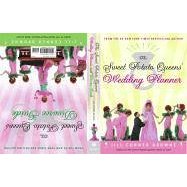
I can't decide. The latest Sweet Potato Queen book is called The Sweet Potato Queens' Wedding Planner/Divorce Guide. Sounded pretty horrible to me until I read the entire AP article, which offered two insightful quotes by author Jill Conner Browne: "If you read both ends of it and you pay attention, you can avoid whichever end of it you want to avoid. If just reading about a wedding scares you, you should run for the hills;" and "Weddings take on lives of their own. They really have nothing to do with marriage. Five minutes after the wedding you are no longer the bride. You are just a wife married to that husband and it is one of the ruder awakenings that the universe has to offer."

Advice for school

Summarized from an education advice column:
  • Be united with your ex in love for the child and rules.
  • Let the school know and give the necessary emergency contact info
  • Let the school know how to handle reports cards and other school records
  • Establish routines
  • Establish new traditions
  • Talk regularly
  • Get help when needed

NPR on God and divorce

NPR's Religion and Ethics Newsweekly did a story Friday on adults who were children of divorce and the impact on their spiritual lives. Here's an excerpt:

"Jen says her church did nothing when she was a kid to help her cope with the pain of her parents' divorce. That's changing now, thanks to the efforts of adults who still suffer from their own parents' breakup. They hope the new church-based programs for today's children of divorce will assure them that the love of God will be a constant in an otherwise turbulent time."

Read the whole transcript here.

Monday, May 29, 2006

Imagining a home

From a poignant May essay in the New York Times Magazine:

"When I was 11, my two sister and I lived with my father in an old brick building in Montreal. There was water damage on the ceilings, and the windows were broken and held together with masking tape. Going up the dark stairwell to our door after school was one of the most unpleasant feelings in the world, but going inside was worse. The apartment was ugly, tiny and filled with cockroaches. We moved there after my mother left us behind with our father, and everything in our lives felt bleak."

The joys and limitations of stepfamilies

From an April essay in the New York Times Magazine:

"The step-labels mislead us. 'Stepmother' imples that I am some variation of my stepchildren's mother, when I am actualy the adult person married to their father. I have felt motherly toward my stepchildren and like a daughter to my stepmother, but I have also felt the failure of not living up to either role."

How Generation X views life

From Fred Brock's Live Well on Less Than You Think, some demographics on GenXers:

"Xers have grown up with a strong sense of reality and a sense that they have to take control of things for themselves."

"Their formative years have taught them to expect the unexpected, to distrust projections and promises, and to count on little except themselves and their friends."

Sunday, May 28, 2006

The healing process

I injured my jaw in December. No, it wasn’t a rough hockey game or a tragic skiing accident. It was a vicious bowl of tortilla chips.

One of my weird family inheritances is loose joints. It can come in pretty handy as a party trick and, despite some bad dislocations through the years, I’ve never broken a bone—the joint gives way before the bone. It seems to afflict different joints at different times and for the last several years, the right side of my jaw has been the problem area. It had gotten so bad last fall, my jaw would literally just fall out of joint while I was sleeping and it would pop out when I ate crusty bread or kettle-cooked chips (yum!) or, yes, tortilla chips. I was waiting for a friend at a Mexican restaurant and, though I knew I shouldn’t, I couldn’t help but chow down on the chips. Sure enough, out it came. But this time it wouldn’t pop back in!

OK, this had never happened before! After two weeks of pain and a jaw that would barely move, I went to the doctor, got x-rays, and talked to an oral surgeon. The bone was back in joint, but the joint was damaged. It would heal on its own with time, but it was also likely to be reinjured frequently while it was healing since it’s a joint that gets used all the time. The best way to let it heal fast was to go on a soft food diet, which—yeah—was not happening, so I chose the slower healing process.

So six months later, I realized last week that I could yawn—really yawn big—without pain. What a feeling!

In the shower next morning, I yawned. No biggie, right? Wrong! I felt everything in my right jaw joint grind together and I grabbed my jaw in pain. I saw the previous six months flash before the eyes of my stomach—no more hamburgers, no more kettle chips, no more loaded corned beef and coleslaw sandwiches from J.P.’s.

But as the day wore on, I realized that while my jaw was a little sore, the new injury was not as bad as I had feared. The healing process was far enough along that what could have been a major setback was instead a minor inconvenience.

And then I thought about the other hurts we carry around. Those places in our hearts where we are flexible and feel good until one day, out of nowhere, wham! It hurts, sometimes excruciatingly; sometimes it’s crippling. We have to learn how to open up again, and gradually we begin to feel joy again where they had been only pain. But there can still be setbacks, new hurts that wound us in the same place. When that happens, there is a temptation to let the fear of the old hurt magnify the new hurt and to become paralyzed in that fear. But sometimes, there is a surprise. The new hurt that we so fear turns out to not be so bad. We have grown and healed and that place that used to be so raw and tender has toughened up and can withstand this new stress.

This is part of God’s design—for our bodies and our hearts.

Agreeing with NOW??!!

According to an article in the Lansing State Journal, Michigan is considering joining the ranks of states that will force family court judges to award joint physical custody unless one parent can be proved to be unfit. Surprisingly, I'm actually on the same side as NOW, the infamous ultraliberal feminist group, on this issue. NOW has issued a statement that this pending legislation "places the interests of parents over the child's interests."

By and for children

From an article in the IndyStar:

Zoe was 8 and Evan 6, when their parents split up about 16 years ago. Several years later, the brother-and-sister team was approached by a publisher and editor to write a book about divorce.
They decided, with Mom's help, to tackle the topic. "Divorce is Not the End of the World" was published in 1997 to give kids a coping tool when their parents break up.

"I think it's easy to think you're gonna get left behind and that they're gonna forget about you, that you're gonna lose all of the rituals and the family memories that you have," Zoe said.

"It's basically losing the structure and the understanding of your life as you know it," said Evan. "It's like a lot of emotions at once. It changes your life permanently and that is a hard thing to deal with at a young age or at any age."

"I think that in a way I'm less likely to get divorced because I've seen divorce up close, firsthand, and it's not something that I want to go through or that I want my children to go through," said Zoe.

Surviving School

Just in time for the end of the school year, here are some good tips from an article on MyWestTexas.com:

Drs. Nicolas Long and Rex Forehand offer the following suggestions in their book, "Making Divorce Easier on Your Child:"
-- Work on strengthening your relationship with your child. Several studies have indicated that if a child has a good relationship with at least one parent following divorce, his or her grades are higher.
-- Closely monitor your child's school performance; that is: check on homework; review tests and assignments; and maintain a close working relationship with your child's teachers.
-- Tell your child's teacher about the divorce so that you can work together to minimize its impact.
-- Try to have a regular time for doing homework; usually before your child starts watching TV or playing video games.

Monday, May 22, 2006

Focus on healing

Thanks to my friend Kelly for the referral to this excellent web site for single parents by Focus on the Family.

Monday, May 08, 2006

France and New England

I leave tomorrow for France and won't be back until May 21, so the blog will be quiet until then. In the meantime, I'm posting a piece I wrote after I took my first solo vacation, about seven years ago. Enjoy the travelogue and I'll look forward to catching up with you all when I get back from France. Au revoir!
++++++++++++++++++++++++++

I began planning the trip in April for mid-September. I called or wrote each of the New England states to get their free vacation packets. Maine, New Hampshire, and Vermont all sent state road maps along with the usual magazine of places and events. I finally narrowed down my trip to those three states and began to plan where I would stay and what I would see. Eventually, I came up with a rough itinerary but left plenty of time to wander and see whatever caught my fancy at the moment.

I left Virginia on a Tuesday night and drove to my parents’ house in south-central Pennsylvania. I was stopping just outside Albany, New York to visit a friend briefly and I still hoped to be in Bennington, Vermont by 4:00 in the afternoon, so I figured getting in two hours of my trip the night before and visiting my parents and brothers was a wise start. Wednesday morning, I was on the road bright and early, after dropping my 17-year-old brother at his bus stop on my way out of the neighborhood. The trip into New York was uneventful, marked only by the excitement of seeing five wild turkeys by the side of the road just outside Oneonta.

I pull into Gene’s Fish Fry in Defreestville, New York around 1:30. My friend and her husband are leasing the fish fry from her father-in-law to decide whether they want to buy it. It’s a good business, but they are in their last week of the season and everyone is tired. The girls, aged 4 and 1, are in the back room, Alexia on a blanket and her baby sister Adrianna in a playpen. They are watching a Disney movie on the TV/VCR combination that their granddad bought them. Priscilla is busy filling orders, but we talk in between and even find time to look at pictures. She fixes me a clam roll, which I know she won’t let me pay for. I try to get the teenage worker to put some money in the cash box for my lunch, but her loyalty is to her boss and she won’t take it.

Back on the road, I drive through Troy, New York. It’s a disappointing town, too much like the urban New Jersey neighborhood where I spent my teenage years. Soon enough, though, I’m past Troy and heading into Vermont. The road winds alternately between woods and farmland on either side and then suddenly around a bend there is a bridge over a river and I am in Vermont. Bennington isn’t far, less than an hour and a half from Defreestville.

The town is beautiful and quaint and picture perfect. It is exactly what I have always envisioned Vermont to be. Coming up on the old town square, the road curves right around the Old First Church. Cars and busses are parked along the road as I drive past and people are everywhere taking pictures, capturing the nostalgia on film. Beyond the church, small shops line the main street. A bookstore looks particularly cozy with a comfy armchair right in front of the plate-glass window. A few cafes still have tables and chairs on the sidewalk and another fish fry sits on a corner. Right now, I want to locate my lodging for the night and check in before finding dinner.

On the other side of town, I finally find the Molly Stark Inn where I have a reservation for the evening. A sign on the front door says the owners will be back at 3:30, but it is 3:30 now and they have just returned. They have friends visiting and are just pulling off their boots after a short hike. Cammie and Reed are the perfect innkeepers, bright, vivacious, and welcoming. Cammie’s enthusiasm makes everyone smile in spite of themselves, and Reed is perfectly gracious. Cammie shows me my room, a cute little corner room with antique furnishings and a quilt and feather pillows on the bed. I have a private bathroom with a stall shower and pedestal sink and I retreat there to take a shower and wash away the greasy feeling from the fish fry.

After my shower, I head downstairs to check out the local menus and decide where to eat. This is the big decision time. Eating alone is a tricky thing. I want to eat somewhere where I won’t feel uncomfortable or attract attention by being alone. Indecisive, I finally just drive through town and look for someplace. The diners that are open look too frequented by locals and I’m afraid I’ll stick out, particularly by myself. The cafes, where I imagine I would feel more comfortable, have all closed shop for the season. Finally, I chicken out and head for a McDonald’s. Over a Quarter Pounder, I vow to be braver tomorrow. After eating, I follow one of the maps I picked up at the inn to two of the three covered bridges in town. One is closed to traffic, but the other is open and spans a rocky creek. Across the street is a beautiful inn surely out of my price range. I snap a few pictures and head back to my own, more reasonably priced, inn.

The inn is quiet. Reed and Cammie are entertaining their guests over dinner on the screened in porch. I pull on an extra sweater and take my journal and my schoolbooks (I’m working on my Master’s) out to the front porch. The road is fairly heavily traveled, but the woods across the road are full of pine trees, the air is nippy, and I am savoring the feeling of being in Vermont. After an hour or so, the air is too cool and I head for the toastiness of the parlor. I trade my schoolbooks for needlework and decide that I lend a quaint and genteel air to the charm the inn already has. When I finally head to bed, I’m asleep nearly as soon as I lay down.

In the morning, the smell of coffee wafts up the back staircase from the kitchen. I head downstairs and take a seat at a table on the screened porch at the side of the house. The morning air is cool, but I’m still in love with the fact that I’m in Vermont and this crispness completes the feeling for me. Cammie informs me that Reed makes everything from scratch and the breakfast is indeed wonderful: fresh fruit followed by two muffins and then a puffed apple pancake, served in a heart-shaped cast iron pan, with maple syrup (what else?) and sausage. Reed later wraps the muffin I didn’t eat at breakfast and I take it along for the road. An older couple from Minnesota sit near me on the screened porch for breakfast. We chat off and on and then friends of theirs arrive and I finish my last cup of coffee alone before heading back upstairs to pack my things. I want to see some more of the town and then get an early start on this day’s journey, so I check out right after breakfast.

The first place I head is the Bennington Museum. I saw this in a AAA travel book someone gave me for my trip. There is an admission fee, but it is reasonable. The museum holds items once used locally on farms and in homes, a collection of glass and pottery from nearby factories, and—their real boast—several paintings by local girl, Grandma Moses.

After perusing the collection, I drive around the corner to Old First Church. This is a treat. Robert Frost is buried in their graveyard and I head to his gravesite first. Signs mark the path that so many lovers of literature must have walked. I locate the long slab that marks the grave of Frost, his wife, and several of their children. I take a few moments to look around and absorb the view of the natural beauty that inspired so many of his poems. I’m already feeling reverential when I head for the church itself.

When I enter the church, an older woman is recounting some facts to a visiting couple. She tells them that the seating has all been restored to the original box seats. I think how funny it is that on a crowded Sunday some people might sit with their backs to the minister. Indeed, the older woman tells us, this is often the case on Christmas.

She gives us a delicious bit of information about the church that I have to see for myself. Teenagers and unmarried adults used to sit in the balcony, girls on one side and boys on the other. The girls’ side is nearly perfectly preserved; the boys’ side, however, is marked up by pocketknives. Some of the boys merely chipped away at the wood until they bored holes straight through to the box next to them. But many carved their initials in beautiful block letters. I smile and think that I wouldn’t have known whether to scold them for defacing the church or complement them on their carving skills. An older gentleman—the tour guide’s husband perhaps— plays hymns on the pipe organ as I walk around the church, lending an atmosphere of worship.

After the church, I head over to the Bennington Monument. The guidebook says this is the tallest manmade structure in Vermont. It is a memorial to a Revolutionary War battle that is said to have turned the tide of the war. Inside the monument hangs a trophy of the battle, a cooking kettle used by the villainous Redcoats. There are stairs to the top of the monument, but they are no longer in use. Instead, an elevator takes me and 5 others to the top lookout area. Long windows surround the lookout and every other one is open to the fresh air on this day. Signs on each wall let us know which view we are seeing: Vermont, New Hampshire, or New York. This birds’-eye view is beautiful, and the stone monument feels much safer than the slightly swaying form of the Statue of Liberty.

Finally, I’ve seen all the sights I wanted to see in Bennington and I head for New Hampshire. The drive is breath-taking. Around every bend is something unexpected: a quaint town, a country church, a mountain stream, a panoramic view of valleys below. I’m driving too slowly in some areas, but I realize that the New Hampshire drivers really don’t mind. They just speed on by, seeming to take the double yellow line more as fair warning that visibility might not be good than as a hard and fast rule that this is a no-passing zone. Still, I have allowed too much time for my drive to Greenfield. And this isn’t Bennington. Greenfield, New Hampshire turns out to be a sleepy nowhere town with nothing to really look at or do to kill some time before I can check into the inn. I finally make my way to Greenfield State Park and find a lakeside beach there where I can read and pray and write in my journal.

Finally, it is time to check into the Greenfield Inn. The inn is more promising from the outside than the interior decorating lives up to. I think that my grandparents might like this place, and the owners are older here than at any of the other inns I stay at. The town is a lovely experience, however. I’m tired of driving, so for dinner I walk down to the all-in-one convenience store/deli/gas station—ever present, I discover, in small New England towns—and buy a sandwich, some chips, and a Coke. I eat on the large wrap-around porch of the inn, listen to the kids playing outside, do some more needlework and finally watch the sun set before heading to my room for the evening. There is complimentary sherry in my room so I treat myself to a small glass while I’m watching television. I have a shared hall bath this time, but there is only one other room of guests in the inn this night and they have a private bath so I don’t really have to share.

In the morning, I’m downstairs while the innkeepers are still getting the breakfast buffet set up. I fix a cup of tea and then, because I’m the only guest who shows up for breakfast, I’m treated to a served meal and the company of the innkeeper. We talk politics over more food than one person should be expected to eat.

I keep driving east to the Maine coast. I pick up Route 1 as quickly as I can since it has been described to me as similar to the Pacific Coast Highway. I have been greatly deceived. Route 1 is not a bad road, but I don’t see the ocean once so I’m disappointed. I get lost in Portland when Route 1 takes an unmarked right hand turn. Forty minutes later, I find the turn and I’m on my way again. I stop in Freeport to hit the LL Bean outlet. The trip is successful and I’m in and out of the store with a purchase in less than 10 minutes! I stop quickly at a street vendor and buy a Coke and a hot dog for the road. This turns out to be a big mistake. Mustard gooshes out the back of the hot dog all over my sweater and one of the two scant pairs of jeans I’ve brought.

I arrive in Boothbay Harbor at just the right time. I follow the directions up a steep hill and see the Welch House perched right at the top. One of the two innkeepers leads me around to the front of the house where my room is located. As we come around the corner, my breath is taken away. There before me is a stunning panoramic view of the town, the harbor, and the Atlantic. I wasn’t expecting this. This night is the best one of my vacation and I wish I had spent two nights here. My room is beautiful, with a canopy bed and another quilt. I take some pictures of the views from the inn and then head down to the town. This is the quintessential Maine town, what I have always imagined and will always remember. It is full of touristy shops and restaurants, but they are in old buildings that fit the image of a seaside town. Everything is quaint and just beautiful.

For dinner, I take the walking bridge across the short end of the harbor and head for the Lobsterman’s Co-op. The innkeeper has recommended this place to me. The charm of these innkeepers is that they seem to be able to size up their guests and recommend just the right thing for each one. This is the perfect place for me, although I don’t hear them recommend it to anyone else.

The co-op is just a couple of walk-up windows on a fishing pier with several rows of picnic tables. The lobsters are in tanks with big steamers next to them. I order the smallest lobster available, a Coke, and a bowl of clam chowder. The chowder is served up immediately and I pick a spot to sit and dig into the best chowder I have ever eaten. Finally, my number is called and I go to retrieve my lobster. I have to leave a $1 deposit for the nutcrackers I get. The lobster comes with little picks, a dish of butter, and hand wipes. I take a picture of the little guy before I crack his first claw. I think this gives away the fact that I’m a first-time lobster eater. A middle-aged woman several tables away comes over.

“I don’t mean to be nosy,” she says, “but is this your first time eating a lobster?” I admit that it is. She continues, “I always have a hard time getting it all cracked open. Would you like my husband to help you crack the lobster open and we can take a picture of you eating your lobster?” So sweet! Of course I agree.

They snap my picture. He gives me a few instructions on how to get all the meat out, but at the first crack of the tail and the remaining claw, the meat just slides right out. The lobster is delicious and I enjoy this new culinary experience while watching sights of this less-touristy part of the harbor.

After dinner, I head back to the inn and sit on one of the decks to write in my journal, drink a cup of tea, and watch the sunset. A schooner parades around the harbor below me and completes the picture. Finally, when night has settled in, I head to my room.

In the morning, I get up early. The breakfast area is right outside my room so I decide to be the first one out there so as not to be disturbed. The innkeepers don’t cook the breakfast here. They have a man and woman who come in and do that. They lay out a buffet, the most notable item of which is scones. They are delicate and light, made just right. A couple from Italy sits near me. The wife speaks no English and the husband is not much better. One of the cooks later tells us that a large percentage of Maine visitors are European. I take a long walk through the town again before I check out. I’m reluctant to leave this area.

I follow the advice of the cooks and make a detour to Ocean Point on my way back to Route 1. They tell me I’ll see the rocky coastline that everyone thinks of when they think of Maine. They are right. I get out several times and climb around on the rocks to take pictures. The ocean roars and splashes up over the rocks. I’m far enough away to not be in danger even from spray and the sea is calm, but the view is still spectacular. Near where I’ve parked my car, the water comes up to a sandy area. I take of my shoes and socks, just to see if it really is as cold as I’ve always been told. It is.

A little farther down I follow directions from my welcome packet at the Welch House to the Pemaquid Lighthouse. I haven’t seen a lighthouse yet and pick this one at random, but it’s a good choice. Walking up to it, a sign separates grass from rock, warning visitors that those who go out on the rocks do so at their own risk; but people are everywhere on the rocks and it looks safe enough. My pictures later do not do this sight justice. The rock has been worn away in long, deep chutes from years of water washing up and back. The striated patterns of the rock are revealed and you can follow the chutes almost down to the water if you dare. Watching the water crash into the rocks and then pour out through crevices makes me think how frightening and dangerous it would be to try to swim ashore here if your ship were sunk off this coast. Thankfully I’m on dry ground.

I head off for Bar Harbor. At the inn where I am scheduled to stay for two nights, I cannot locate the innkeeper. When I do at last find him, I am already a bit disgruntled and disappointed with my choice of lodging. My outlook doesn’t brighten after discovering that my room is cramped and cold, the shower in the shared bathroom is dirty, and there are no locks on any of the doors. The innkeeper’s one redeeming quality is a good knowledge of the island and a desire to see that his guests find the hidden sights. I leave the inn that afternoon and drive around the island, eventually ending up at the Jordan Pond House in Acadia National Park for dinner. The scenery at the restaurant is beautiful and serene: woods and a small pond, separated by a wide meadow where the deer come to graze at dusk. The food is good if pricey. One of the restaurant’s specialties is afternoon tea, but since I have arrived too late for that, I order a pot of tea with my dessert and linger at the table watching afternoon turn to early evening. Leaving the restaurant, I race partway up Cadillac Mountain and find a good view for the acclaimed sunset colors. Then I head back and go to bed early in hopes of being out of the dreaded inn as early as possible in the morning.

Next morning, I wake and shower, trying not to stand flat-footed in the shower stall, and then head to the country kitchen. Dirty dishes are piled on the countertop and in the sink and, to my chagrin as a lone traveler, breakfast is served family style at the large round table. I manage to eat a blueberry muffin and drink a cup of tea and then leave for my day of sightseeing. Most of my day is to be spent in Acadia National Park. I haven’t gotten up early enough for sunrise on Cadillac Mountain (those who do are the first in America to see the morning sun), but I head to Sand Beach. Located in a quiet little cove and boasting a serene atmosphere, Sand Beach is still just that—a sand beach. It owes its fame here to the fact that so much of the Maine coast is rocky, making it something of an anomaly. My next stop is Thunder Hole. I spend over an hour here waiting for the tide to come further in and make the site begin to “perform.” Unfortunately for the performance, I have visited the park on a day when the sea is too calm to produce any real splash and “thunder” here. Still, the larger waves that do roll in give a small foretaste of the sight and sound that must be here during rougher seas.

My next stop is where my unfortunate choice of innkeepers really pays off. He has directed all of his guests to the “beach of the magical, musical stones.” Not marked on any of the Acadia maps or mentioned in any of the guidebooks I’ve read, this beach is composed of thousands and thousands of small rocks that click together as you walk over them and create a virtual symphony of music as the waves roll them over and against one another. The sound is lovely anywhere on the beach, but to really enjoy it best you have to get so close to the water that you must keep a constant lookout to keep from getting wet. I spend several hours here, slowly moving back as the tide comes in further. Finally, with reluctance, I leave.

I see a sign for “Bubble Rock” and remember seeing it in a magazine before I left. It’s only a short hike, according to the trail sign, so I follow the trail markers along the path. Very soon, the path becomes steep and rocky. Rail ties have been embedded in the path to make a sort of staircase. With legs as short as mine, the climb quickly begins to burn in my muscles. Soon, however, I reach the top of the mountain where the views are indeed beautiful. Bubble Rock seems balanced precariously on an edge of this crest; however, the magazine article I read mentioned that hundreds of children have tried unsuccessfully over the years to dislodge it. The rock scrambling in this less traveled part of the park is fun and the hike back down to my car is much easier than the trek up. I’ve missed the last horse-drawn carriage ride through the park, but my tardiness saves me some money. Instead, I drive up Cadillac Mountain and eat a quick lunch. Tourists line every rock, so this isn’t a place to come to be alone with nature. The views are panoramic: Cadillac Mountain is the highest point on the eastern seaboard and the water below is strewn with small islands.

I feel like I’ve seen all the sites I wanted to in the park, so I drive down to the town of Bar Harbor hoping to catch a whale watching boat tour. When I finally find a parking space and walk back to the launching site, there is a harbor tour boat just getting ready to leave. I opt for that instead and it turns out to be a good choice. Our tour guides are Maine lobstermen and the boat is a lobster boat. We get a lecture on lobster fishing and watch as our guide pulls up several lobster traps. More than lobsters get caught in these traps, and we get to look at a crab and touch a sea cucumber, a starfish, and several other sea creatures. The destination of our trip is a group of rocks where harbor seals are sunning themselves. We cruise back and forth while all of us snap photographs of the seals. On our way back into the dock, our guide points out the nest of a bald eagle and the eagle mother sitting on a nearby branch. We are far away and her size is far more impressive to see than to read about.

One smart thing I’ve done during this day is to keep different types of clothing with me. I start with a pair of jeans and a T-shirt, over which I layer a flannel shirt and a sweatshirt. Later, during my hike to Bubble Rock, I leave the sweatshirt behind and eventually end up with the flannel shirt tied around my waist. For the boat tour, I dig a wool pullover sweater out of the trunk of my car and leave that on for the remainder of the afternoon and evening.

Back in town after the boat tour, I walk around to see what the shops have to offer. This is another disappointing town for me. The shops are like any you would find in a New Jersey seaside town and everything looks new and touristy. There is a good fudge and ice cream shop where I buy a chocolate-covered pretzel and some non-pareils to keep me company. A restaurant has been recommended to me and it looks like a place that would have good food; however, it’s not a spot for the single traveler. It’s at the end of a quiet street and appears very retiring. I opt instead for a sidewalk café in the middle of town where I eat seafood linguine and watch the passersby. After dinner, I drive back up Cadillac Mountain in hopes of seeing the sunset and delaying my return to the inn. The sun disappears in the mist only halfway to the horizon and I linger until the light fades before making my way back down.

Next morning, I eat breakfast and head out as early as possible. I have a long drive ahead of me anyway, so the early start is good. The morning is foggy and I miss seeing any sights on my drive through inland Maine. I end up in New Hampshire by mid-afternoon. I’m in the White Mountain region where scenic lookouts appear along the road every couple of miles. I don’t stop until I see the unmistakable sight of Mt. Washington, tallest peak in the eastern U.S. Here I stop by the side of the road and snap several pictures out of my window. Soon after, I reach my inn for the next two nights, the Jefferson Inn in Jefferson, New Hampshire. In stark contrast to the inn I have just left, this place is gracious, lovely, and well run. Jefferson is another nowhere town, but I love it. I head across the street to the deli/grocery/gas station and buy a Coke to enjoy on the porch of the inn. Later, for dinner I head into the next town and get a sub and fries at a pizza shop. Back at the inn, I head to my room. This is a room I can enjoy spending the evening in. The room is large and comfy with Shaker style décor. The poster bed has flannel sheets and a quilt covering and a rocking chair sits in the corner. I curl up in bed with a novel about Jefferson that is lying on the bedside table and read until I’m too sleepy to see.

Breakfast here is better than any other place I stay. The meal is served in a good-sized dining room at the back of the house with views of the wooded mountain stretching behind the inn and the innkeepers’ horses exploring their sloped pasture. A fruit platter is followed by pancakes, sausage, and asparagus quiche. I spend the entire hour chatting with a lovely couple from North Carolina who are seated at another table. They want to fix me up with their son who lives in the same Virginia town I do. When breakfast is done, I trade my clogs for hiking boots and head out for the day.

I drive to the Flume, a waterfall and stream nestled in a long narrow gorge and reminds me of wooded trails I walked with my parents years ago. The hike takes me about two hours since I meander along the paths and stop often to enjoy the scenery. There are two covered bridges along the path, and natural beauty is unabashedly everywhere. Chipmunks and squirrels play in the leaves and the sound of water is never far away. After the hike, I spot signs along the road for the Old Man in the Mountain and pull off where indicated. I expect to have a short hike to the spot where I can see this natural sculpture jutting from the rock at the top of a mountain, but I get out of my car and turn my head and discover the phenomenon before me. I must have been staring at it all along my drive, but only from this angle does the human profile become apparent. It is striking, and I regret not bringing my parents’ camera with the zoom lens or at least a pair of binoculars.

I arrive next at Mount Washington itself. I have read the brochures on the Mount Washington Cog Railway and decide I can’t miss this attraction. It’s the most expensive thing I’ll do on my vacation, but I know I’ll regret it if I don’t go. I get on the 1:00 train, but it’s a three hour round trip and well worth every penny I spend even on this foggy day. By the time we reach the summit of the mountain, the air is so heavy with fog that it is raining. The temperature at the top is low enough that occasionally a snowflake floats by with the rain. I scramble up the pile of rocks to the official summit just to say I’ve been there and then, too soon, the twenty minute stop at the top is over and we’re heading back down. On the way down, I sit next to a woman who has just hiked up the mountain with her husband, father, and seven-year-old daughter. I feel like a wimp having taken the railway both up and down.

There is no time for a nice dinner this evening as I am scheduled to go on a moose tour. I grab some fast food and head to the town of Gorham where the tour departs. The tour bus is a little late in arriving, but I do not mind. As I wait, I dream I live here, as I watch a high school soccer game on the field in the middle of town, a quaint church off to one side, a hill dappled with fall colors behind, and even a train that comes whistling through to complete the picturesque scene.
The moose tour guarantees a moose sighting or your money back, but the tour also provides some good history of the local area including information about the logging companies that built these towns. Our moose sighting doesn’t occur until the very end of the evening when we finally spot a cow in a bog just off the road. We all exit the bus to take pictures of her and she actually walks closer to us. She seems to want to cross the road but is confused by all of us standing there watching her. Finally, she walks back into the woods and we get back on the bus and head back to Gorham. The evening is a success and the town of Gorham keeps our tourist dollars for this trip.

Next morning, breakfast is another treat and I reluctantly leave to head toward Burlington, Vermont. The drive across the rest of New Hampshire and on across Vermont is lovely and I see so many places I’d like to stop and spend time exploring. I arrive in Burlington much earlier than I had anticipated and decide to check out the town first. This is good-sized town. It still retains an aura of New England charm, but it is no quaint little village. The air is a little nippy here along the shores of Lake Champlain, so I decide not to walk around anywhere. It’s still too early to go to the inn I’m scheduled for tonight, though; so instead, I see some outlet stores just off the highway and pull off to do some shopping. I find several good purchases and then head to the inn.

After a week of traveling, with both good and bad experiences, I want someplace quiet where I can be alone for the evening. Arriving at this inn, I discover that it is really just a room for rent. The bathroom is downstairs and at the other end of the house. The house itself is located on a busy corner with lots of traffic noise, and the owners have two granddaughters staying with them who are blaring the television. I lay down on the bed and indulge in some tears while I decide what to do. Finally, I decide. This is my last night. I can either stay and be miserable, or I can leave and drive home tonight. I opt for the latter course. The innkeeper is offended that I’m leaving, I can tell, but I pay my bill and hit the road. I call my parents from a McDonald’s and tell them not to wait up but to leave the door unlocked. It is 3:30 when I leave and I know it will be at least a nine hour drive. I stop once outside of Binghamton, New York for gas and some Nutter Butters and then drive straight through. By 12:30 am I am getting tired, but I know I’m almost home. I pull into my parents’ driveway at 1:00, dump my bags on the floor and sleep on the couch.

Sunday, May 07, 2006

Philip Roth on divorce


More divorce in literature. From a review in Slate of Roth's new book Everyman. A nod to the reviewer for mentioning one of my favorite writers, Thomas Hardy.

"Everyman opens at a northern New Jersey graveside, where Roth's hero—the Everyman of the title, who throughout remains unnamed—is being buried by the broken remnants of his several families. His one loving child, a daughter, gives a terse but heartfelt eulogy. His sons, 40-something but still children of divorce, drop dirt on the coffin, choked with resentment against a father they will forever regard as a deserter."

Friday, May 05, 2006

The history of marriage

From the Pew Research Center, comes this interesting chart of marital status over the last 100 years. Frankly, I found it surprising and fascinating. According to this chart, there were actually fewer (percentage-wise) adults living as divorced or never-marrieds in 2000 than there were in 1900. Yes, you read that right: fewer. My guess is that the lower percentage of those declaring their marital status solely as divorced now is due to second (or third or fourth or twenty-first) marriages. Folks are only declaring their current marital status, not any previous divorces that might have taken place. The stigma of divorce was much greater a hundred years ago (MUCH greater), making remarriage difficult for the divorced. The percentage of widows is higher in 2000, a nod to medical technology and better overall health. Married with spouse absent and separated are about the same. My great-great-grandmother fell into this category and would have been in the 1900 census. Great-great-grandpa ran off to another state and started a new family, abandoning his wife and children.

Wednesday, May 03, 2006

Tuesday, May 02, 2006

Hope from a teen

"Statistics can tell me I'm more prone to become pregnant, or live in poverty, or end up in prison. However, I choose which paths to take in life, and the results of others, with similar upbringings, do not need to affect my future."

Read the whole essay here.

The little foxes can ruin the vineyard

Gary Thomas on marriage:

"'It's the petty spiritual choices that we make that poisons what was once a very precious relationship and turns it into one that is marked by misery and frustration. We have lost the character to make a lifelong decision that requires sacrifice, generosity, service and the concept of putting the needs of a couple ahead of ourselves as an individual.'
"'They are ashamed they have acted in a petty, selfish manner rather than seeing marriage as a way to face up to what can help them grow. It's easier to run away and start over with someone else than it is to ask for forgiveness and courageously face it. '"

Words from a grandfather

Martin Sheen on his son's divorce and his grandkids:

"'I asked all sides to stop for a minute, to have a cease fire, to heal the wounds and put the fires out and come together a little bit because what's really at stake are the future of these little kids, LOLA and SAM, so that's who we have to focus on right now.'
'It'll end and I have every confidence that both Charlie and Denise will become friends again,' Martin revealed. 'It'll take a while, they have to go through this, but I just hope that they both stop and consider what's at stake for the future of these children.'"

Monday, May 01, 2006

Kurt Russell on stepparenting

From Parade magazine:

"Russell and [Goldie] Hawn connected in 1983 while making Swing Shift. She had two children, Kate and Oliver (now 27 and 29), with her second husband, singer Bill Hudson. 'The children were very young. I told them, Just because I fell in love with your mom doesn't mean I've fallen in love with you. And just because I'm in your life doesn't mean you have to fall in love with me. We can be fair and honest to each other and see how we do.
"His voice gets husky as he adds, 'It wasn't very long before they got under my skin--in the best way. I felt very, very attached to Katie and Oliver. I had a strong need to be responsible for them. They decided to call me Pa.' Russell and Hawn then had a son together, Wyatt, now 19, and the family was truly cemented, ring or no ring."

Poets on divorce

"Although half of all American marriages end in divorce, poets are reluctant to write entire collections about it. John Updike addressed the topic obliquely in his 1977 collection Tossing and Turning, published the year he split with his first wife - and then remarried. At the time of her suicide in 1974, Anne Sexton had completed a new collection, 45 Mercy Street, a third of which touched on her recent divorce. 'I have killed our lives together,' she wrote hysterically in one poem, 'axed off each head.'
"Claudia Emerson's Late Wife is not so gory a glimpse into this grim rite of passage, but it is nothing if not complete. Winner of the 2006 Pulitzer Prize in poetry, the volume looks back on a relationship's demise, from the first serpent of doubt to the slow drift of spirits to the breakup and its final, bitter aftermath."
Read the rest of the Philadelphia Inquirer article here.